
Side note: If you’re wondering, we weren’t required to write posts on chapters 7 & 8, so here’s my chapter 9 analysis:
The chapter states, “Organizations consist of human beings, after all, and every organization has a certain tone, attitude, or feel to it. Further organizations are constructed in different ways depending on goals, attitudes, and principles” (Littlejohn, Foss, and Oetzel, 2017). So think of the organizations in your life that you are individually a part of — for me, I’m a member of Queens University of Charlotte Athletics (along with being a graduate student), and I’m employed at Dick’s Sporting Goods.
Both organizations involve sports (of course, why would I be involved with something non-sports related) which are both comfortable work settings for me, where I am able to communicate well with my coworkers/customers. I have sport information knowledge, as well as knowledge about individual sports for sales purposes. This goes to show that I’m able to communicate well in a sports-related environment wherever I go in life (and I wouldn’t have it any other way; a life without sports is a life I don’t want to live!).
Getting back to the chapter, it introduced the network theory, in which Noshir Contractor and Peter Monge believe networks emerge from communication connections among people, serve a variety of functions, and make possible different network roles (Littlejohn, Foss, and Oetzel, 2017). This makes me think about how I stay connected with the organization (and my favorite professional football team) the Buffalo Bills.
The network they’ve created, especially in social media, helps me stay connected with what is happening in the organization, along with live updates on games and events the team is involved in. Fans are also able to communicate with each other on these multiple mediums, which expands their network even further.
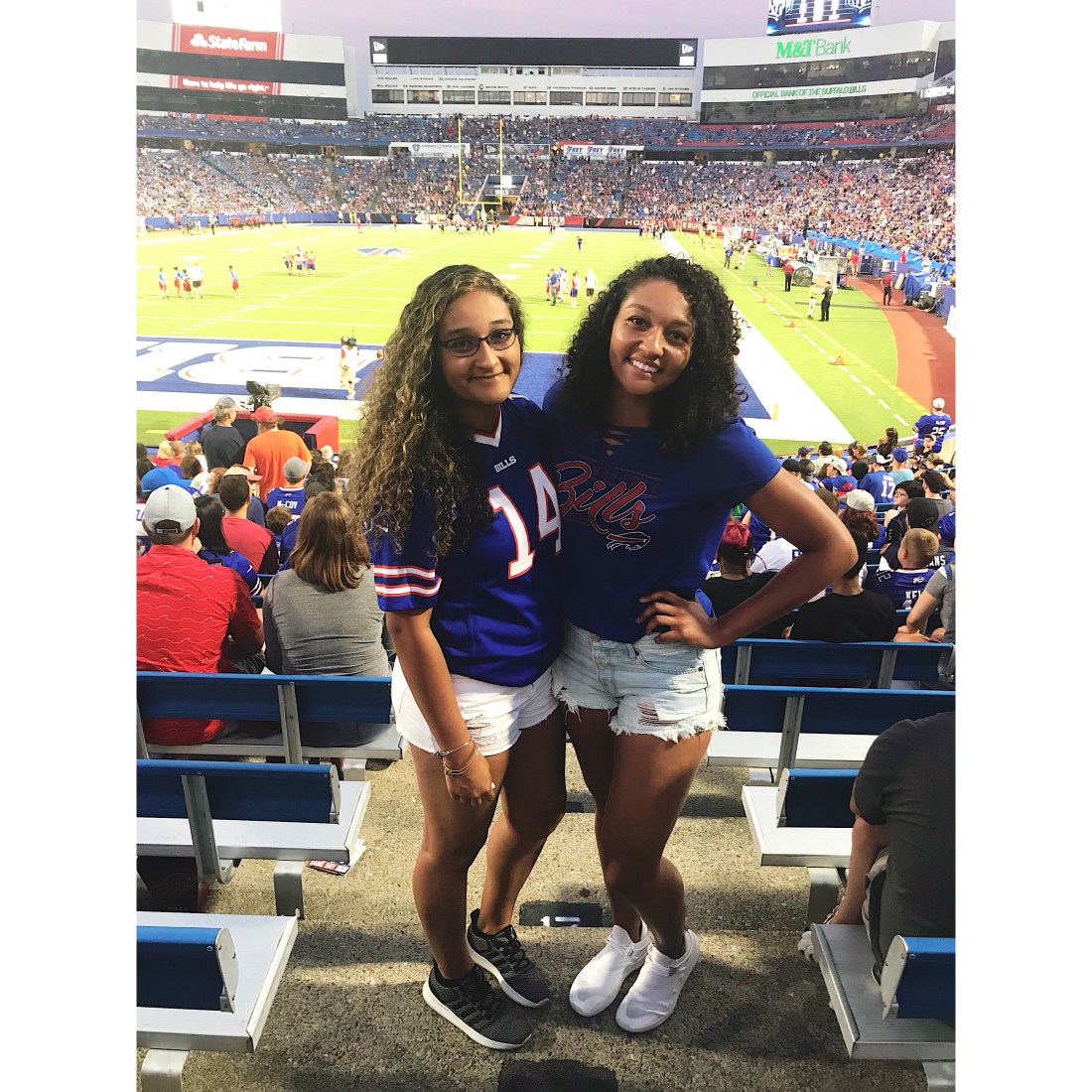
So here’s a picture of my sister and I at a preseason game on my birthday since we won BIG today! (GO BILLS!)
Littlejohn, Stephen W., et al. Theories of Human Communication. Waveland Press, Inc., 2017.
 Janae's Journey